Akershus Fortress
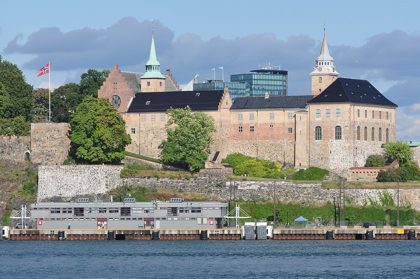
Akershus Fortress is a medieval castle built in the late 1290s by King Haakon V on a promontory above the Oslofjord in Oslo, Norway, following a 1287 attack on the city. It repelled every military assault until Nazi forces entered unopposed in 1940. After a great fire levelled medieval Oslo in 1624, King Christian IV transformed the fortress into a Renaissance palace and rebuilt the city alongside it.
Used as a prison throughout its history, it saw Vidkun Quisling executed on its grounds after World War II. Today it is an active military installation, open free of charge daily, and houses Norway's Resistance Museum and the Norwegian Armed Forces Museum. Several Norwegian monarchs, including Haakon VII and Olav V, are interred in its Royal Mausoleum.
Visitor information
- Location
- Oslo
- Country
- Norway
- Tier
- C (Worth a visit if you're already in the area)
- Coordinates
- 59.9067, 10.7361
Frequently asked questions
- Where is Akershus Fortress?
- Akershus Fortress is in Oslo, Norway (approximately 59.9067, 10.7361).
- Can you visit Akershus Fortress?
- Yes — Akershus Fortress is a recognised tourist attraction in Norway.
- What tier is Akershus Fortress on the Castle Atlas?
- Akershus Fortress is rated C tier on the Castle Atlas — Worth a visit if you're already in the area.
- What can you see at Akershus Fortress?
- Akershus Fortress is a medieval castle built in the late 1290s by King Haakon V on a promontory above the Oslofjord in Oslo, Norway, following a 1287 attack on the city. It repelled every military assault until Nazi forces entered unopposed in 1940. After a great fire levelled medieval Oslo in 1624, King Christian IV transformed the fortress into a Renaissance palace and rebuilt the city alongside it.