Dublin Castle
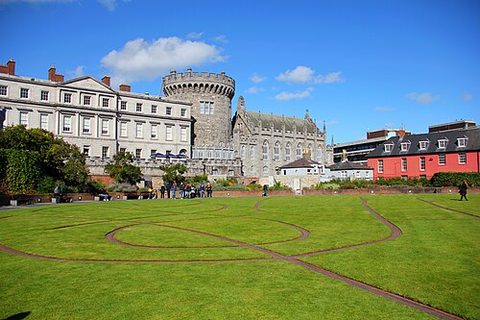
Dublin Castle sits at the heart of the Irish capital, founded in 1204 by Meiler Fitzhenry on King John's orders and largely complete by 1230. For over seven centuries it was the seat of English and British rule in Ireland — housing parliament, courts, and the viceregal residence. The castle was ceremonially handed over to Michael Collins and the Provisional Government in 1922.
The Record Tower, dating from around 1228, is the sole surviving medieval structure. The complex is generally open to the public and contains the Chester Beatty Library and State Apartments. In 1907, the Irish Crown Jewels were stolen from the castle and have never been recovered. Since 1938, every presidential inauguration has been held here.
Visitor information
- Location
- Ireland
- Country
- Ireland
- Tier
- C (Worth a visit if you're already in the area)
- Coordinates
- 53.3431, -6.2674
- Official site
- http://dublincastle.ie/
Frequently asked questions
- Where is Dublin Castle?
- Dublin Castle is in Ireland, Ireland (approximately 53.3431, -6.2674).
- Can you visit Dublin Castle?
- Yes — Dublin Castle is open to visitors; see the official site at http://dublincastle.ie/ for hours and tickets.
- What tier is Dublin Castle on the Castle Atlas?
- Dublin Castle is rated C tier on the Castle Atlas — Worth a visit if you're already in the area.
- What can you see at Dublin Castle?
- Dublin Castle sits at the heart of the Irish capital, founded in 1204 by Meiler Fitzhenry on King John's orders and largely complete by 1230. For over seven centuries it was the seat of English and British rule in Ireland — housing parliament, courts, and the viceregal residence. The castle was ceremonially handed over to Michael Collins and the Provisional Government in 1922.