Raseborg Castle
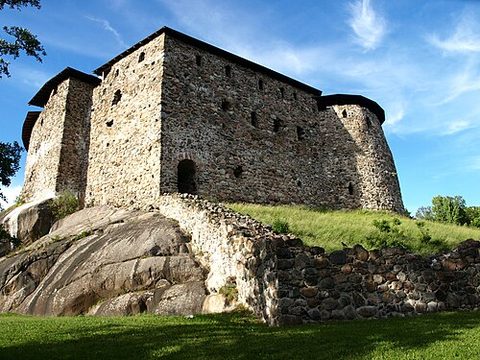
Raseborg Castle stands in ruins in Snappertuna, southern Finland, built in the 1370s and traditionally credited to Swedish magnate Bo Jonsson Grip, to protect Swedish interests in southern Finland against the Hanseatic city of Tallinn. The D-shaped stone fortress featured a round donjon, an inner bailey, and a wooden maritime barrier preventing foreign ships from approaching the harbour.
Postglacial land uplift gradually cut off its sea access, and the castle was abandoned in 1553 after Helsinki's founding made it strategically redundant. Restoration began in the 1890s and the ruins are open to visitors in summer. Since 1966 the site has hosted an annual Swedish-language open-air theater festival, one of the largest of its kind in Finland.
Visitor information
- Location
- Finland
- Country
- Finland
- Tier
- C (Worth a visit if you're already in the area)
- Coordinates
- 59.9917, 23.6511
Frequently asked questions
- Where is Raseborg Castle?
- Raseborg Castle is in Finland, Finland (approximately 59.9917, 23.6511).
- Can you visit Raseborg Castle?
- Yes — Raseborg Castle is a recognised tourist attraction in Finland.
- What tier is Raseborg Castle on the Castle Atlas?
- Raseborg Castle is rated C tier on the Castle Atlas — Worth a visit if you're already in the area.
- What can you see at Raseborg Castle?
- Raseborg Castle stands in ruins in Snappertuna, southern Finland, built in the 1370s and traditionally credited to Swedish magnate Bo Jonsson Grip, to protect Swedish interests in southern Finland against the Hanseatic city of Tallinn. The D-shaped stone fortress featured a round donjon, an inner bailey, and a wooden maritime barrier preventing foreign ships from approaching the harbour.