Kaunas Castle
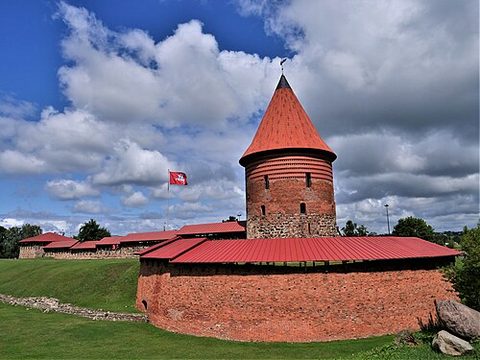
Kaunas Castle stands at the confluence of the Nemunas and Neris rivers in Kaunas, Lithuania, one of the country's most strategically vital medieval sites. A stone Gothic castle was built here in the mid-14th century to defend against the Teutonic Order; in 1362 the Knights breached the walls after a three-week siege, though Lithuanians recaptured the fortress that same year in 1384. After the 1410 Battle of Grunwald ended the Teutonic threat, the fortress became an administrative center used by Grand Duke Vytautas for state functions.
About one-third of the original structure survives; reconstruction completed in 2011 opened a branch of the Kaunas City Museum on site. The castle is immortalized in Adam Mickiewicz's 1828 poem Konrad Wallenrod.
Visitor information
- Location
- Lithuania
- Country
- Lithuania
- Tier
- C (Worth a visit if you're already in the area)
- Coordinates
- 54.8989, 23.885
- Official site
- https://kaunomuziejus.lt/en/plan-your-visit-to-kaunas-castle/kaunas-castle/
Frequently asked questions
- Where is Kaunas Castle?
- Kaunas Castle is in Lithuania, Lithuania (approximately 54.8989, 23.885).
- Can you visit Kaunas Castle?
- Yes — Kaunas Castle is open to visitors; see the official site at https://kaunomuziejus.lt/en/plan-your-visit-to-kaunas-castle/kaunas-castle/ for hours and tickets.
- What tier is Kaunas Castle on the Castle Atlas?
- Kaunas Castle is rated C tier on the Castle Atlas — Worth a visit if you're already in the area.
- What can you see at Kaunas Castle?
- Kaunas Castle stands at the confluence of the Nemunas and Neris rivers in Kaunas, Lithuania, one of the country's most strategically vital medieval sites. A stone Gothic castle was built here in the mid-14th century to defend against the Teutonic Order; in 1362 the Knights breached the walls after a three-week siege, though Lithuanians recaptured the fortress that same year in 1384. After the 1410 Battle of Grunwald ended the Teutonic threat, the fortress became an administrative center used by Grand Duke Vytautas for state functions.