Riga Castle
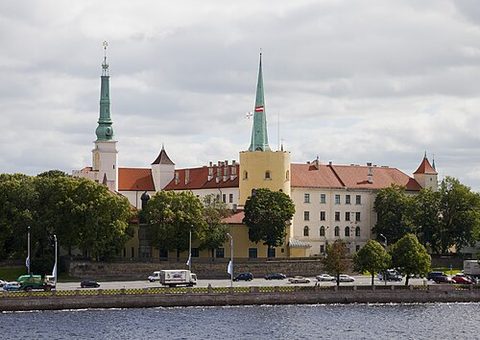
Riga Castle stands on the left bank of the Daugava River in the Old Town of Riga, Latvia. The Livonian Order built an earlier fortress on the site, but Riga's citizens tore it down in 1484 during a conflict with the Order; the present castle was rebuilt between 1491 and 1515.
It passed through Polish-Lithuanian, Swedish, and Russian hands before becoming the Latvian president's official residence in 1922. A serious fire on 20 June 2013 destroyed roughly 3,200 square metres including the roof and ceremonial halls, though most museum collections survived. After restoration completed in 2016, the castle resumed its dual role as the official presidential residence and home to national museum collections open to the public.
Visitor information
- Location
- Latvia
- Country
- Latvia
- Tier
- C (Worth a visit if you're already in the area)
- Coordinates
- 56.9509, 24.1006
- Official site
- http://www.president.lv/pk/content/?cat_id=11&lng=en
Frequently asked questions
- Where is Riga Castle?
- Riga Castle is in Latvia, Latvia (approximately 56.9509, 24.1006).
- Can you visit Riga Castle?
- Yes — Riga Castle is open to visitors; see the official site at http://www.president.lv/pk/content/?cat_id=11&lng=en for hours and tickets.
- What tier is Riga Castle on the Castle Atlas?
- Riga Castle is rated C tier on the Castle Atlas — Worth a visit if you're already in the area.
- What can you see at Riga Castle?
- Riga Castle stands on the left bank of the Daugava River in the Old Town of Riga, Latvia. The Livonian Order built an earlier fortress on the site, but Riga's citizens tore it down in 1484 during a conflict with the Order; the present castle was rebuilt between 1491 and 1515.