Corvin Castle
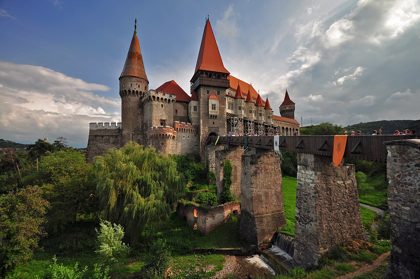
Standing on limestone cliffs above the Zlaști River in Hunedoara, Romania, Corvin Castle is one of the largest Gothic castles in Europe. Construction began in 1440 under Transylvanian voivode John Hunyadi, who raised a formidable seat of power with a Knights' Hall, chapel, drawbridge, and multiple bastions on the site of an older fortification. His son King Matthias Corvinus added Renaissance embellishments from 1458.
The castle is Romanian state property and is open to the public year-round. Local legend holds that Vlad the Impaler was imprisoned here under Hunyadi — a story that has made it a sought-after filming location, including for Robert Eggers' 2024 Nosferatu remake.
Visitor information
- Location
- Hunedoara
- Country
- Romania
- Tier
- A (Magnificent, well worth a dedicated trip)
- Coordinates
- 45.7492, 22.8883
- Official site
- https://castelulcorvinilor.ro/
Frequently asked questions
- Where is Corvin Castle?
- Corvin Castle is in Hunedoara, Romania (approximately 45.7492, 22.8883).
- Can you visit Corvin Castle?
- Yes — Corvin Castle is open to visitors; see the official site at https://castelulcorvinilor.ro/ for hours and tickets.
- What tier is Corvin Castle on the Castle Atlas?
- Corvin Castle is rated A tier on the Castle Atlas — Magnificent, well worth a dedicated trip.
- What can you see at Corvin Castle?
- Standing on limestone cliffs above the Zlaști River in Hunedoara, Romania, Corvin Castle is one of the largest Gothic castles in Europe. Construction began in 1440 under Transylvanian voivode John Hunyadi, who raised a formidable seat of power with a Knights' Hall, chapel, drawbridge, and multiple bastions on the site of an older fortification. His son King Matthias Corvinus added Renaissance embellishments from 1458.