Hohensalzburg Fortress
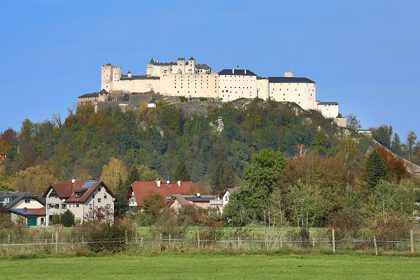
Hohensalzburg Fortress crowns Festungsberg hill at 506 metres above Salzburg. Construction began in 1077 under Archbishop Gebhard von Helfenstein during the Investiture Controversy, and successive prince-archbishops expanded it into one of Europe's largest and best-preserved medieval fortresses. Its defences were never breached; a siege during the 1525 Peasants' War ended in failure.
The Reißzug, documented in 1515, is considered probably the oldest surviving operational railway in the world. The fortress attracts over one million visitors annually and houses a mechanical pipe organ built in 1502, known as the Salzburg Bull, which plays daily from Palm Sunday through October.
Visitor information
- Location
- Salzburg
- Country
- Austria
- Tier
- B (Great castles)
- Coordinates
- 47.795, 13.0472
- Official site
- https://www.salzburg-burgen.at/de/hohensalzburg-castle/
Frequently asked questions
- Where is Hohensalzburg Fortress?
- Hohensalzburg Fortress is in Salzburg, Austria (approximately 47.795, 13.0472).
- Can you visit Hohensalzburg Fortress?
- Yes — Hohensalzburg Fortress is open to visitors; see the official site at https://www.salzburg-burgen.at/de/hohensalzburg-castle/ for hours and tickets.
- What tier is Hohensalzburg Fortress on the Castle Atlas?
- Hohensalzburg Fortress is rated B tier on the Castle Atlas — Great castles.
- What can you see at Hohensalzburg Fortress?
- Hohensalzburg Fortress crowns Festungsberg hill at 506 metres above Salzburg. Construction began in 1077 under Archbishop Gebhard von Helfenstein during the Investiture Controversy, and successive prince-archbishops expanded it into one of Europe's largest and best-preserved medieval fortresses. Its defences were never breached; a siege during the 1525 Peasants' War ended in failure.