Kufstein Fortress
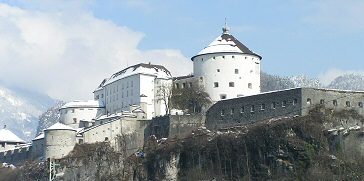
Perched on a 90-metre rocky outcrop above the Inn River in Kufstein, Tyrol, Austria, this fortress was first documented in 1205 as Castrum Caofstein. Emperor Maximilian I seized it in 1504 and expanded it substantially, adding a massive round tower between 1518 and 1522.
Under Habsburg rule it served as a political prison; notable inmates include the Hungarian writer and language reformer Ferenc Kazinczy (1799–1800) and some 100 Poles from the 1846 Kraków Uprising. Today it houses the City Museum of Kufstein and the Heldenorgel — the world's largest open-air organ, installed in 1931 — which plays daily noon concerts memorialising the dead of both World Wars. Open to visitors.
Visitor information
- Location
- Austria
- Country
- Austria
- Tier
- C (Worth a visit if you're already in the area)
- Coordinates
- 47.5812, 12.1691
- Official site
- http://www.festung.kufstein.at/
Frequently asked questions
- Where is Kufstein Fortress?
- Kufstein Fortress is in Austria, Austria (approximately 47.5812, 12.1691).
- Can you visit Kufstein Fortress?
- Yes — Kufstein Fortress is open to visitors; see the official site at http://www.festung.kufstein.at/ for hours and tickets.
- What tier is Kufstein Fortress on the Castle Atlas?
- Kufstein Fortress is rated C tier on the Castle Atlas — Worth a visit if you're already in the area.
- What can you see at Kufstein Fortress?
- Perched on a 90-metre rocky outcrop above the Inn River in Kufstein, Tyrol, Austria, this fortress was first documented in 1205 as Castrum Caofstein. Emperor Maximilian I seized it in 1504 and expanded it substantially, adding a massive round tower between 1518 and 1522.