Forchtenstein Castle
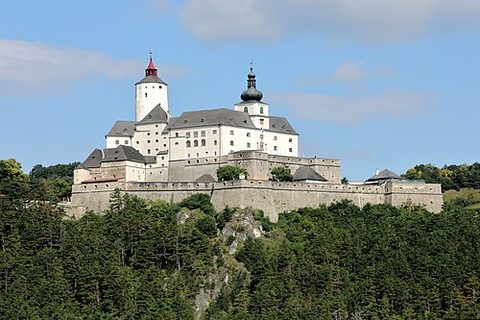
Forchtenstein Castle crowns a ridge in northern Burgenland, Austria, at 511 metres above the Wulka valley. The Lords of Mattersdorf raised the original 50-metre keep at the beginning of the 14th century; after their line died out around 1450, the castle passed to the Habsburgs. Emperor Ferdinand II granted it to Nikolaus Esterházy in 1622, after which Italian craftsmen transformed it with elaborate portals and grand interiors.
The castle treasury is considered Europe's last surviving baroque art and curiosity chamber still in its original location, displaying weapons, clocks, ivory work, and other marvels accumulated over centuries. The armory is the largest privately held arsenal in Europe. The castle remains with the Esterházy Private Foundation and is open to visitors.
Visitor information
- Location
- Austria
- Country
- Austria
- Tier
- B (Great castles)
- Coordinates
- 47.7097, 16.3317
- Official site
- https://esterhazy.at/de/burgforchtenstein/index.do
Frequently asked questions
- Where is Forchtenstein Castle?
- Forchtenstein Castle is in Austria, Austria (approximately 47.7097, 16.3317).
- Can you visit Forchtenstein Castle?
- Yes — Forchtenstein Castle is open to visitors; see the official site at https://esterhazy.at/de/burgforchtenstein/index.do for hours and tickets.
- What tier is Forchtenstein Castle on the Castle Atlas?
- Forchtenstein Castle is rated B tier on the Castle Atlas — Great castles.
- What can you see at Forchtenstein Castle?
- Forchtenstein Castle crowns a ridge in northern Burgenland, Austria, at 511 metres above the Wulka valley. The Lords of Mattersdorf raised the original 50-metre keep at the beginning of the 14th century; after their line died out around 1450, the castle passed to the Habsburgs. Emperor Ferdinand II granted it to Nikolaus Esterházy in 1622, after which Italian craftsmen transformed it with elaborate portals and grand interiors.