Orava Castle
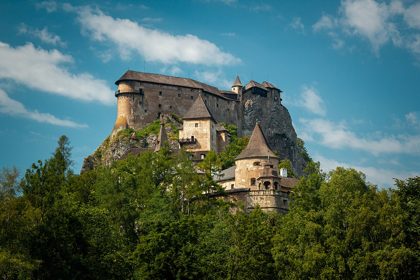
Orava Castle clings dramatically to a 112-metre limestone crag above the Orava River in northern Slovakia, its walls climbing the rock in three terraced levels built from the 13th through the early 17th century. First recorded in 1267, it became the administrative seat of Árva county within the Kingdom of Hungary. The Thurzo family, wealthy mining magnates, acquired the castle in 1556 and undertook its most ambitious Renaissance rebuilding.
A great fire gutted the wooden interior in 1800; a comprehensive restoration completed in 1968 transformed it into one of Slovakia's leading museums. The castle served as Count Orlok's Transylvanian lair in F. W. Murnau's 1922 silent film Nosferatu.
Visitor information
- Location
- Oravsky Podzamok
- Country
- Slovakia
- Tier
- B (Great castles)
- Coordinates
- 49.2617, 19.3581
- Official site
- http://www.oravamuzeum.sk/
Frequently asked questions
- Where is Orava Castle?
- Orava Castle is in Oravsky Podzamok, Slovakia (approximately 49.2617, 19.3581).
- Can you visit Orava Castle?
- Yes — Orava Castle is open to visitors; see the official site at http://www.oravamuzeum.sk/ for hours and tickets.
- What tier is Orava Castle on the Castle Atlas?
- Orava Castle is rated B tier on the Castle Atlas — Great castles.
- What can you see at Orava Castle?
- Orava Castle clings dramatically to a 112-metre limestone crag above the Orava River in northern Slovakia, its walls climbing the rock in three terraced levels built from the 13th through the early 17th century. First recorded in 1267, it became the administrative seat of Árva county within the Kingdom of Hungary. The Thurzo family, wealthy mining magnates, acquired the castle in 1556 and undertook its most ambitious Renaissance rebuilding.