Kronborg Castle
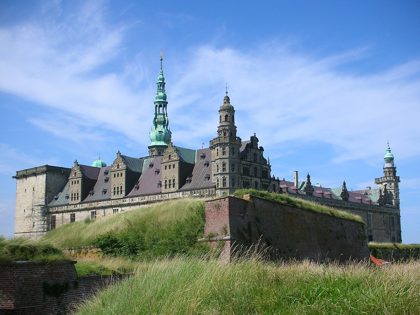
Kronborg stands at the narrowest point of the Oresund strait in Helsingor, Denmark, where Eric of Pomerania built a fortress in the 1420s to levy tolls on Baltic shipping. King Frederick II had it rebuilt as a Renaissance castle between 1574 and 1585 by Flemish architects Anthonis van Obbergen and Hans Hendrik van Paesschen; the great hall at 62 by 12 metres was the largest in Northern Europe when completed in 1582.
A fire gutted the interior in 1629, sparing only the chapel; Christian IV rebuilt it by 1639. Swedish forces plundered the castle in 1658, and it served as barracks until 1923. Renovated and reopened in 1938, it was inscribed on the UNESCO World Heritage List in 2000. Known as Shakespeare's Elsinore, it has hosted Hamlet productions since 1816.
Visitor information
- Location
- Helsingor
- Country
- Denmark
- Tier
- B (Great castles)
- Coordinates
- 56.0386, 12.6219
- Official site
- https://www.kronborg.dk
Frequently asked questions
- Where is Kronborg Castle?
- Kronborg Castle is in Helsingor, Denmark (approximately 56.0386, 12.6219).
- Can you visit Kronborg Castle?
- Yes — Kronborg Castle is open to visitors; see the official site at https://www.kronborg.dk for hours and tickets.
- What tier is Kronborg Castle on the Castle Atlas?
- Kronborg Castle is rated B tier on the Castle Atlas — Great castles.
- What can you see at Kronborg Castle?
- Kronborg stands at the narrowest point of the Oresund strait in Helsingor, Denmark, where Eric of Pomerania built a fortress in the 1420s to levy tolls on Baltic shipping. King Frederick II had it rebuilt as a Renaissance castle between 1574 and 1585 by Flemish architects Anthonis van Obbergen and Hans Hendrik van Paesschen; the great hall at 62 by 12 metres was the largest in Northern Europe when completed in 1582.