Kuressaare Castle
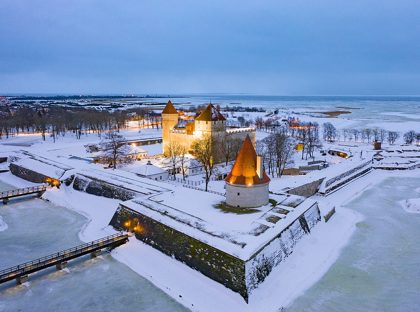
Kuressaare Castle on Saaremaa island, western Estonia, is one of the best-preserved medieval fortifications in the Baltic region. Built by the Teutonic Order for the bishops of Ösel-Wieck, with its main convent building completed by 1381, it served as the episcopal residence and administrative centre for nearly two centuries. The compact late-Gothic structure features a 37-metre defence tower and a medieval hypocaust underfloor heating system. Bastions were updated in the 16th and 17th centuries.
After passing through Danish, Swedish, and Russian hands, Estonian authorities acquired it in September 1920. It now houses the Saaremaa Museum with exhibitions on natural history, medieval life, and Soviet-era repression.
Visitor information
- Location
- Saaremaa
- Country
- Estonia
- Tier
- C (Worth a visit if you're already in the area)
- Coordinates
- 58.2469, 22.4793
Frequently asked questions
- Where is Kuressaare Castle?
- Kuressaare Castle is in Saaremaa, Estonia (approximately 58.2469, 22.4793).
- Can you visit Kuressaare Castle?
- Yes — Kuressaare Castle is a recognised tourist attraction in Estonia.
- What tier is Kuressaare Castle on the Castle Atlas?
- Kuressaare Castle is rated C tier on the Castle Atlas — Worth a visit if you're already in the area.
- What can you see at Kuressaare Castle?
- Kuressaare Castle on Saaremaa island, western Estonia, is one of the best-preserved medieval fortifications in the Baltic region. Built by the Teutonic Order for the bishops of Ösel-Wieck, with its main convent building completed by 1381, it served as the episcopal residence and administrative centre for nearly two centuries. The compact late-Gothic structure features a 37-metre defence tower and a medieval hypocaust underfloor heating system. Bastions were updated in the 16th and 17th centuries.