Haapsalu Castle
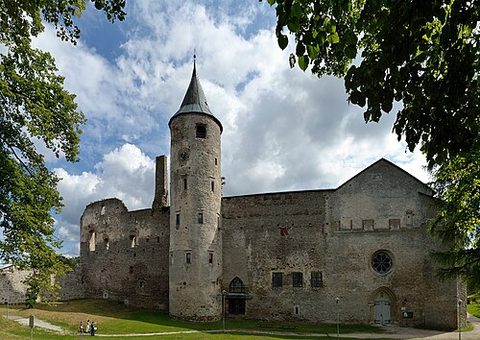
Episcopal fortress in Haapsalu, Estonia, founded by the Bishopric of Ösel-Wiek in the 13th century. The cathedral, consecrated around 1279, is the largest single-naved church in the Baltic countries, with 15.5-metre domical vaults and 425 m² of floor area. The complex reached its final form under Bishop Johannes IV Kievel (1515–1527).
Severely damaged in the Livonian War (1558–1582), the castle was sold in 1625 by Swedish King Gustav II Adolf to Count Jakob De la Gardie; a fire on 23 March 1688 destroyed the church roof and residential quarters. The site is largely ruined but open to visitors and hosts concerts. Local legend holds that a ghostly White Lady appears on the inner chapel wall during August full moons — said to be a girl immured for a forbidden romance with a cathedral canon.
Visitor information
- Location
- Estonia
- Country
- Estonia
- Tier
- C (Worth a visit if you're already in the area)
- Coordinates
- 58.9472, 23.5386
Frequently asked questions
- Where is Haapsalu Castle?
- Haapsalu Castle is in Estonia, Estonia (approximately 58.9472, 23.5386).
- Can you visit Haapsalu Castle?
- Yes — Haapsalu Castle is a recognised tourist attraction in Estonia.
- What tier is Haapsalu Castle on the Castle Atlas?
- Haapsalu Castle is rated C tier on the Castle Atlas — Worth a visit if you're already in the area.
- What can you see at Haapsalu Castle?
- Episcopal fortress in Haapsalu, Estonia, founded by the Bishopric of Ösel-Wiek in the 13th century. The cathedral, consecrated around 1279, is the largest single-naved church in the Baltic countries, with 15.5-metre domical vaults and 425 m² of floor area. The complex reached its final form under Bishop Johannes IV Kievel (1515–1527).