Hohenschwangau Castle
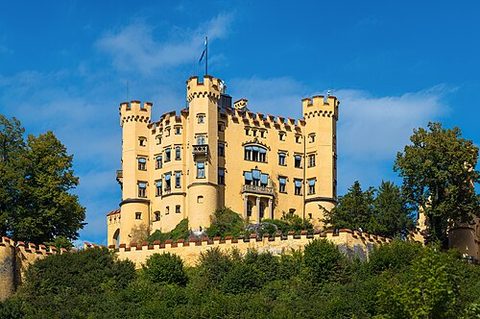
Hohenschwangau Castle stands on a wooded hill above the alpine lakes near Füssen in southwestern Bavaria, Germany. Crown Prince Maximilian — later King Maximilian II — purchased the ruined medieval Schwanstein fortress in 1832 and rebuilt it in Neogothic style from 1833, with work continuing to 1855, guided initially by architect Domenico Quaglio.
The interiors are covered with more than 90 wall frescoes depicting medieval German legends including the swan-knight Lohengrin and the Parzival cycle, and it was here that the young Ludwig II absorbed the tales that would later shape his passionate patronage of Richard Wagner. Open year-round, it receives over 300,000 visitors annually via guided tour.
Visitor information
- Location
- Germany
- Country
- Germany
- Tier
- B (Great castles)
- Coordinates
- 47.5558, 10.7364
- Official site
- http://www.hohenschwangau.de/
Frequently asked questions
- Where is Hohenschwangau Castle?
- Hohenschwangau Castle is in Germany, Germany (approximately 47.5558, 10.7364).
- Can you visit Hohenschwangau Castle?
- Yes — Hohenschwangau Castle is open to visitors; see the official site at http://www.hohenschwangau.de/ for hours and tickets.
- What tier is Hohenschwangau Castle on the Castle Atlas?
- Hohenschwangau Castle is rated B tier on the Castle Atlas — Great castles.
- What can you see at Hohenschwangau Castle?
- Hohenschwangau Castle stands on a wooded hill above the alpine lakes near Füssen in southwestern Bavaria, Germany. Crown Prince Maximilian — later King Maximilian II — purchased the ruined medieval Schwanstein fortress in 1832 and rebuilt it in Neogothic style from 1833, with work continuing to 1855, guided initially by architect Domenico Quaglio.