Burghausen Castle
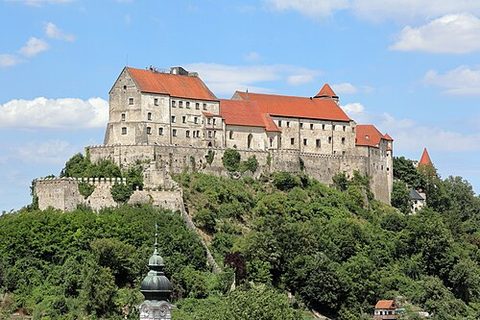
Burghausen Castle stretches 1,051 metres along a narrow ridge above the Salzach River in Burghausen, Upper Bavaria, Germany - the longest castle complex in the world according to Guinness World Records. First documented before 1025 and transferred to the Wittelsbach dynasty in 1168, main stone construction began in 1255 under Duke Henry XIII, with the most intensive phase under the Landshut Wittelsbachs from 1392 to 1503.
Six interconnected courtyards hold a palace, multiple chapels, a great hall, arsenals, and grain towers. Today it is owned by the Free State of Bavaria and open to the public, housing the State Castle Museum with ducal apartments, a branch gallery of the Bavarian State Picture Collection, and the Burghausen City Museum.
Visitor information
- Location
- Germany
- Country
- Germany
- Tier
- A (Magnificent, well worth a dedicated trip)
- Coordinates
- 48.1561, 12.8289
Frequently asked questions
- Where is Burghausen Castle?
- Burghausen Castle is in Germany, Germany (approximately 48.1561, 12.8289).
- Can you visit Burghausen Castle?
- Yes — Burghausen Castle is a recognised tourist attraction in Germany.
- What tier is Burghausen Castle on the Castle Atlas?
- Burghausen Castle is rated A tier on the Castle Atlas — Magnificent, well worth a dedicated trip.
- What can you see at Burghausen Castle?
- Burghausen Castle stretches 1,051 metres along a narrow ridge above the Salzach River in Burghausen, Upper Bavaria, Germany - the longest castle complex in the world according to Guinness World Records. First documented before 1025 and transferred to the Wittelsbach dynasty in 1168, main stone construction began in 1255 under Duke Henry XIII, with the most intensive phase under the Landshut Wittelsbachs from 1392 to 1503.