Old Grodno Castle
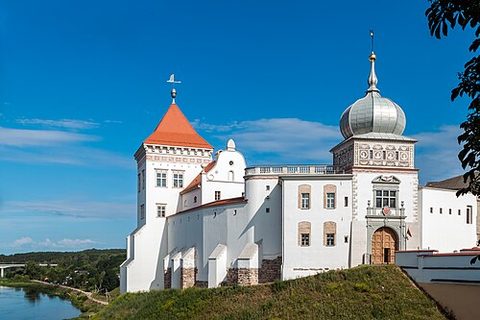
Old Grodno Castle stands at the confluence of the Neman and Gorodnichanka rivers in Grodno, Belarus, on a site fortified since the 11th century. Vytautas the Great undertook major stone reconstruction between 1391 and 1398, adding five Brick Gothic towers and making it a primary ducal residence.
In the late 16th century, King Stephen Bathory commissioned Italian architect Scotto of Parma to remodel it in Renaissance style, though the project ceased after Bathory's death in Grodno in 1586. King Casimir IV Jagiellon died at the castle in 1492. In 1673 it was designated a venue for every third Sejm of the Polish-Lithuanian Commonwealth. Today it functions as a historical and archaeological museum holding over 200,000 artifacts, one of the largest collections in Belarus.
Visitor information
- Location
- Belarus
- Country
- Belarus
- Tier
- C (Worth a visit if you're already in the area)
- Coordinates
- 53.677, 23.823
- Official site
- http://history.grodno.museum.by/
Frequently asked questions
- Where is Old Grodno Castle?
- Old Grodno Castle is in Belarus, Belarus (approximately 53.677, 23.823).
- Can you visit Old Grodno Castle?
- Yes — Old Grodno Castle is open to visitors; see the official site at http://history.grodno.museum.by/ for hours and tickets.
- What tier is Old Grodno Castle on the Castle Atlas?
- Old Grodno Castle is rated C tier on the Castle Atlas — Worth a visit if you're already in the area.
- What can you see at Old Grodno Castle?
- Old Grodno Castle stands at the confluence of the Neman and Gorodnichanka rivers in Grodno, Belarus, on a site fortified since the 11th century. Vytautas the Great undertook major stone reconstruction between 1391 and 1398, adding five Brick Gothic towers and making it a primary ducal residence.