Kamerlengo Castle
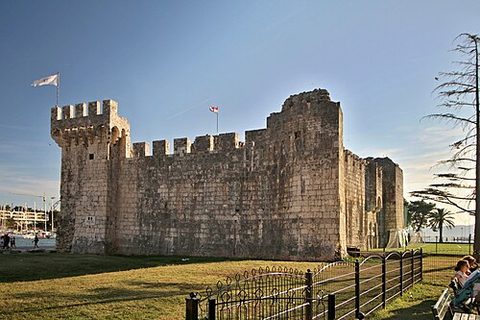
A Venetian fortress on the southwestern edge of Trogir, Croatia, built between 1420 and 1437 by master builder Marin Radoj after Venice took the city following a siege of nearly two months. The name derives from kamerlengo, the title of a Venetian administrative chamberlain who governed within.
Its trapezoidal plan features a monumental polygonal tower facing the sea, corner towers, and an interior courtyard housing a chapel dedicated to St. Mark, patron saint of Venice, adorned with reliefs of the winged lion and Venetian family coats of arms. The surrounding moat was filled in the mid-19th century when most of the city walls were demolished. Today it serves as an open-air venue for summer performances.
Visitor information
- Location
- Croatia
- Country
- Croatia
- Tier
- C (Worth a visit if you're already in the area)
- Coordinates
- 43.5153, 16.2475
Frequently asked questions
- Where is Kamerlengo Castle?
- Kamerlengo Castle is in Croatia, Croatia (approximately 43.5153, 16.2475).
- Can you visit Kamerlengo Castle?
- Yes — Kamerlengo Castle is a recognised tourist attraction in Croatia.
- What tier is Kamerlengo Castle on the Castle Atlas?
- Kamerlengo Castle is rated C tier on the Castle Atlas — Worth a visit if you're already in the area.
- What can you see at Kamerlengo Castle?
- A Venetian fortress on the southwestern edge of Trogir, Croatia, built between 1420 and 1437 by master builder Marin Radoj after Venice took the city following a siege of nearly two months. The name derives from kamerlengo, the title of a Venetian administrative chamberlain who governed within.