Chateau de Chenonceau
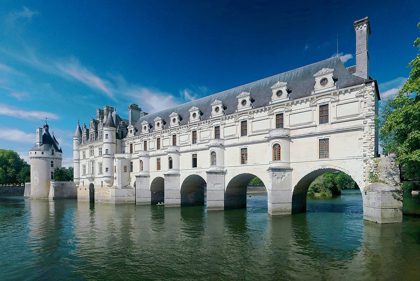
Spanning the River Cher on an arched bridge in the Loire Valley, Chateau de Chenonceau is the most visited chateau in France after Versailles, attracting around 800,000 visitors a year. Thomas Bohier purchased the site in 1513; construction ran from 1514 to 1522 on an old mill foundation, largely directed by his wife Katherine Briconnet.
The chateau was shaped by the women who controlled it: Diane de Poitiers commissioned the arched bridge in 1555–1559, and Catherine de Medici added a gallery spanning it in 1570–1576, earning the nickname Chateau des Dames. The gallery served as a hospital in WWI; in WWII its midpoint marked the line between occupied and free France. The Menier family has owned it since 1913.
Visitor information
- Location
- Chenonceaux, Loire Valley
- Country
- France
- Tier
- B (Great castles)
- Coordinates
- 47.3247, 1.0704
- Official site
- https://www.chenonceau.com/
Frequently asked questions
- Where is Chateau de Chenonceau?
- Chateau de Chenonceau is in Chenonceaux, Loire Valley, France (approximately 47.3247, 1.0704).
- Can you visit Chateau de Chenonceau?
- Yes — Chateau de Chenonceau is open to visitors; see the official site at https://www.chenonceau.com/ for hours and tickets.
- What tier is Chateau de Chenonceau on the Castle Atlas?
- Chateau de Chenonceau is rated B tier on the Castle Atlas — Great castles.
- What can you see at Chateau de Chenonceau?
- Spanning the River Cher on an arched bridge in the Loire Valley, Chateau de Chenonceau is the most visited chateau in France after Versailles, attracting around 800,000 visitors a year. Thomas Bohier purchased the site in 1513; construction ran from 1514 to 1522 on an old mill foundation, largely directed by his wife Katherine Briconnet.