Chateau de Saumur
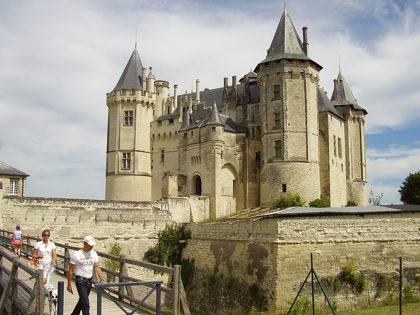
Château de Saumur rises above the confluence of the Loire and Thouet rivers in Saumur, France, its turrets and corner towers making it one of the Loire Valley's most recognisable silhouettes. Founded in the 10th century by Theobald I, Count of Blois, it was rebuilt by Henry II of England and transformed into a palace-castle by Louis I of Anjou from 1368, who replaced its round towers with octagonal ones still standing today. Duke René of Anjou, who resided there until 1480, nicknamed it the "château d'amour" (castle of love).
After serving as a prison and military barracks, the town acquired it and opened a museum in 1912, now holding around 35,000 objects spanning decorative arts, ceramics, and an exceptional equestrian collection.
Visitor information
- Location
- Saumur, Loire Valley
- Country
- France
- Tier
- B (Great castles)
- Coordinates
- 47.2561, -0.0725
Frequently asked questions
- Where is Chateau de Saumur?
- Chateau de Saumur is in Saumur, Loire Valley, France (approximately 47.2561, -0.0725).
- Can you visit Chateau de Saumur?
- Yes — Chateau de Saumur is a recognised tourist attraction in France.
- What tier is Chateau de Saumur on the Castle Atlas?
- Chateau de Saumur is rated B tier on the Castle Atlas — Great castles.
- What can you see at Chateau de Saumur?
- Château de Saumur rises above the confluence of the Loire and Thouet rivers in Saumur, France, its turrets and corner towers making it one of the Loire Valley's most recognisable silhouettes. Founded in the 10th century by Theobald I, Count of Blois, it was rebuilt by Henry II of England and transformed into a palace-castle by Louis I of Anjou from 1368, who replaced its round towers with octagonal ones still standing today. Duke René of Anjou, who resided there until 1480, nicknamed it the "château d'amour" (castle of love).