Chateau d'Angers
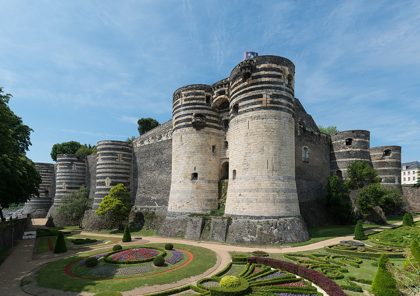
The Château d'Angers dominates the River Maine in the Loire Valley, France, its curtain wall stretching more than 800 metres and punctuated by 17 massive towers that once stood 40 metres tall before being cut down for artillery. The present fortress was built by Louis IX between approximately 1230 and 1242, on a site with prior Roman occupation.
Its greatest treasure is the Apocalypse Tapestry — commissioned in 1373 by Louis I, Duke of Anjou, it is the largest surviving set of medieval tapestries in the world and has been housed in a purpose-built gallery here since 1954. No invading force ever captured the castle. Managed by the Centre des monuments nationaux, it is open to the public and draws over 170,000 visitors a year.
Visitor information
- Location
- Angers, Pays de la Loire
- Country
- France
- Tier
- C (Worth a visit if you're already in the area)
- Coordinates
- 47.47, -0.56
- Official site
- https://www.chateau-angers.fr
Frequently asked questions
- Where is Chateau d'Angers?
- Chateau d'Angers is in Angers, Pays de la Loire, France (approximately 47.47, -0.56).
- Can you visit Chateau d'Angers?
- Yes — Chateau d'Angers is open to visitors; see the official site at https://www.chateau-angers.fr for hours and tickets.
- What tier is Chateau d'Angers on the Castle Atlas?
- Chateau d'Angers is rated C tier on the Castle Atlas — Worth a visit if you're already in the area.
- What can you see at Chateau d'Angers?
- The Château d'Angers dominates the River Maine in the Loire Valley, France, its curtain wall stretching more than 800 metres and punctuated by 17 massive towers that once stood 40 metres tall before being cut down for artillery. The present fortress was built by Louis IX between approximately 1230 and 1242, on a site with prior Roman occupation.