Château de Foix
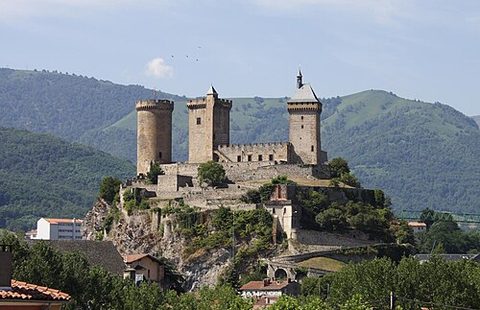
Chateau de Foix rises from a rock outcrop above the town of Foix in the Ariege department of southern France. Documented from 987 and seat of the County of Foix from 1034, the fortress comprises three towers: two square donjons built before the 11th century, and a round tower added in the 15th century.
Simon de Montfort besieged it during the Albigensian Crusade in 1211 and 1212 but never took it; the castle fell only once, in 1486, through treachery. Cardinal Richelieu later exempted it from his demolition orders. Classified as a historic monument in 1840, it has housed the Ariege departmental museum since 1930, covering prehistory through Gallo-Roman and medieval archaeology.
Visitor information
- Location
- France
- Country
- France
- Tier
- C (Worth a visit if you're already in the area)
- Coordinates
- 42.9656, 1.605
- Official site
- http://www.sites-touristiques-ariege.fr/sites-touristiques-ariege/chateau-de-foix
Frequently asked questions
- Where is Château de Foix?
- Château de Foix is in France, France (approximately 42.9656, 1.605).
- Can you visit Château de Foix?
- Yes — Château de Foix is open to visitors; see the official site at http://www.sites-touristiques-ariege.fr/sites-touristiques-ariege/chateau-de-foix for hours and tickets.
- What tier is Château de Foix on the Castle Atlas?
- Château de Foix is rated C tier on the Castle Atlas — Worth a visit if you're already in the area.
- What can you see at Château de Foix?
- Chateau de Foix rises from a rock outcrop above the town of Foix in the Ariege department of southern France. Documented from 987 and seat of the County of Foix from 1034, the fortress comprises three towers: two square donjons built before the 11th century, and a round tower added in the 15th century.