Doune Castle
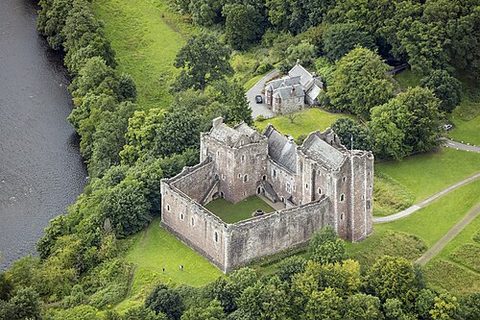
Doune Castle sits where the Ardoch Burn flows into the River Teith in Stirlingshire, Scotland. Robert Stewart, Duke of Albany and Regent of Scotland, built the present structure around 1381-1400, and it served as a royal hunting lodge and dower house for Scottish queens including Margaret of Denmark and Margaret Tudor.
After the 1746 Battle of Falkirk, the castle held prisoners including John Witherspoon, who escaped by knotting bedsheets together and later became a signatory of the American Declaration of Independence. Managed by Historic Environment Scotland and open to the public, it is also famous as a primary filming location for Monty Python and the Holy Grail (1975).
Visitor information
- Location
- United Kingdom
- Country
- United Kingdom
- Tier
- C (Worth a visit if you're already in the area)
- Coordinates
- 56.1852, -4.0503
Frequently asked questions
- Where is Doune Castle?
- Doune Castle is in United Kingdom, United Kingdom (approximately 56.1852, -4.0503).
- Can you visit Doune Castle?
- Yes — Doune Castle is a recognised tourist attraction in United Kingdom.
- What tier is Doune Castle on the Castle Atlas?
- Doune Castle is rated C tier on the Castle Atlas — Worth a visit if you're already in the area.
- What can you see at Doune Castle?
- Doune Castle sits where the Ardoch Burn flows into the River Teith in Stirlingshire, Scotland. Robert Stewart, Duke of Albany and Regent of Scotland, built the present structure around 1381-1400, and it served as a royal hunting lodge and dower house for Scottish queens including Margaret of Denmark and Margaret Tudor.
All castles in the United Kingdom · Explore the full Castle Atlas →