Dunvegan Castle
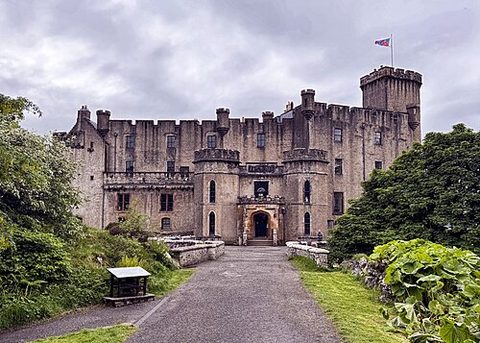
Dunvegan Castle on the Isle of Skye, Scotland, is one of the longest-continuously-occupied castles in Britain and the ancestral seat of the Chiefs of Clan MacLeod. A curtain wall was raised here in the 13th century; a four-storey tower house followed in the late 14th century; and the Fairy Tower was added around 1500. Victorian-era baronialisation around 1840 gave the exterior its current mock-medieval battlements.
The castle remains a private family home while also functioning as a historic house museum open to the public. Among its most prized possessions is the Fairy Flag, a fragile silk banner that clan tradition holds was given by a fairy to protect the MacLeods in times of mortal peril.
Visitor information
- Location
- United Kingdom
- Country
- United Kingdom
- Tier
- B (Great castles)
- Coordinates
- 57.4485, -6.59
- Official site
- https://www.dunvegancastle.com/
Frequently asked questions
- Where is Dunvegan Castle?
- Dunvegan Castle is in United Kingdom, United Kingdom (approximately 57.4485, -6.59).
- Can you visit Dunvegan Castle?
- Yes — Dunvegan Castle is open to visitors; see the official site at https://www.dunvegancastle.com/ for hours and tickets.
- What tier is Dunvegan Castle on the Castle Atlas?
- Dunvegan Castle is rated B tier on the Castle Atlas — Great castles.
- What can you see at Dunvegan Castle?
- Dunvegan Castle on the Isle of Skye, Scotland, is one of the longest-continuously-occupied castles in Britain and the ancestral seat of the Chiefs of Clan MacLeod. A curtain wall was raised here in the 13th century; a four-storey tower house followed in the late 14th century; and the Fairy Tower was added around 1500. Victorian-era baronialisation around 1840 gave the exterior its current mock-medieval battlements.
All castles in the United Kingdom · Explore the full Castle Atlas →