Pembroke Castle
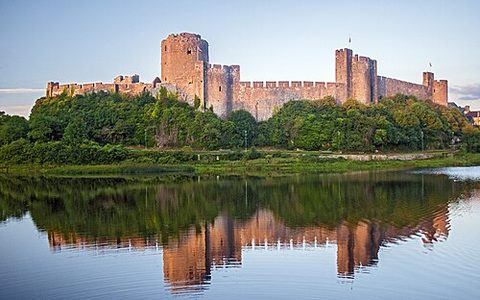
Pembroke Castle stands on a rocky promontory above the Pembroke River in Pembrokeshire, Wales. Founded in 1093 by Arnulf of Montgomery during the Norman conquest, it was rebuilt in stone by William Marshal after 1189, creating most of the structure that survives today. Henry VII was born here in 1457 to Margaret Beaufort. During the Civil War it withstood a seven-week siege before falling to Oliver Cromwell in 1648.
It is the largest privately owned castle in Wales, managed jointly by the Philipps family and Pembroke Town Council. Beneath the keep, Wogan Cavern has yielded prehistoric megafauna remains including hippopotamus bones estimated at 120,000 years old.
Visitor information
- Location
- United Kingdom
- Country
- United Kingdom
- Tier
- B (Great castles)
- Coordinates
- 51.6769, -4.9206
- Official site
- https://pembrokecastle.co.uk/
Frequently asked questions
- Where is Pembroke Castle?
- Pembroke Castle is in United Kingdom, United Kingdom (approximately 51.6769, -4.9206).
- Can you visit Pembroke Castle?
- Yes — Pembroke Castle is open to visitors; see the official site at https://pembrokecastle.co.uk/ for hours and tickets.
- What tier is Pembroke Castle on the Castle Atlas?
- Pembroke Castle is rated B tier on the Castle Atlas — Great castles.
- What can you see at Pembroke Castle?
- Pembroke Castle stands on a rocky promontory above the Pembroke River in Pembrokeshire, Wales. Founded in 1093 by Arnulf of Montgomery during the Norman conquest, it was rebuilt in stone by William Marshal after 1189, creating most of the structure that survives today. Henry VII was born here in 1457 to Margaret Beaufort. During the Civil War it withstood a seven-week siege before falling to Oliver Cromwell in 1648.
All castles in the United Kingdom · Explore the full Castle Atlas →