Glamis Castle
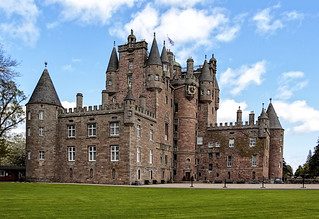
Glamis Castle stands in the Strathmore valley of Angus, Scotland, its turreted profile rising against the Grampian foothills. The land was granted to Sir John Lyon by Robert II in 1372; the castle was rebuilt as a tower house in the early 15th century and further remodeled in the 17th century into its current fairy-tale form.
Home to the Earls of Strathmore for over six centuries, it was the childhood residence of Queen Elizabeth the Queen Mother, and Princess Margaret was born here on 21 August 1930. The castle is open to the public and is a Category A listed building. Though Shakespeare's Macbeth references the title "Thane of Glamis," the real 11th-century King Macbeth had no actual connection to the castle.
Visitor information
- Location
- United Kingdom
- Country
- United Kingdom
- Tier
- A (Magnificent, well worth a dedicated trip)
- Coordinates
- 56.6203, -3.0024
- Official site
- https://www.glamis-castle.co.uk/
Frequently asked questions
- Where is Glamis Castle?
- Glamis Castle is in United Kingdom, United Kingdom (approximately 56.6203, -3.0024).
- Can you visit Glamis Castle?
- Yes — Glamis Castle is open to visitors; see the official site at https://www.glamis-castle.co.uk/ for hours and tickets.
- What tier is Glamis Castle on the Castle Atlas?
- Glamis Castle is rated A tier on the Castle Atlas — Magnificent, well worth a dedicated trip.
- What can you see at Glamis Castle?
- Glamis Castle stands in the Strathmore valley of Angus, Scotland, its turreted profile rising against the Grampian foothills. The land was granted to Sir John Lyon by Robert II in 1372; the castle was rebuilt as a tower house in the early 15th century and further remodeled in the 17th century into its current fairy-tale form.
All castles in the United Kingdom · Explore the full Castle Atlas →