Vadstena Castle
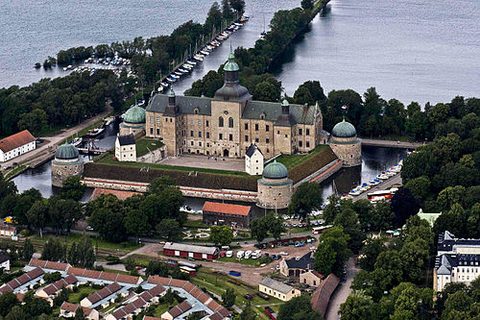
Vadstena Castle stands on the shore of Lake Vättern in Östergötland, Sweden, begun by King Gustav Vasa in 1545 as a defensive stronghold against Danish and Småland threats, and completed in 1620 after contributions from successive Vasa monarchs. It was gradually transformed into one of Sweden's finest Renaissance palaces, with four corner cannon towers and a surrounding moat still intact.
In 1552 Gustav Vasa married Katarina Stenbock here, with the ceremony held in the nearby convent church and the feast at the castle. Since 1899 the eastern wing has housed the regional archives; the western half is open as a museum displaying 16th- and 17th-century royal interiors. The International Vadstena Academy stages opera each summer in the castle's Bridal Hall.
Visitor information
- Location
- Sweden
- Country
- Sweden
- Tier
- C (Worth a visit if you're already in the area)
- Coordinates
- 58.446, 14.8836
- Official site
- https://vadstenaslott.com
Frequently asked questions
- Where is Vadstena Castle?
- Vadstena Castle is in Sweden, Sweden (approximately 58.446, 14.8836).
- Can you visit Vadstena Castle?
- Yes — Vadstena Castle is open to visitors; see the official site at https://vadstenaslott.com for hours and tickets.
- What tier is Vadstena Castle on the Castle Atlas?
- Vadstena Castle is rated C tier on the Castle Atlas — Worth a visit if you're already in the area.
- What can you see at Vadstena Castle?
- Vadstena Castle stands on the shore of Lake Vättern in Östergötland, Sweden, begun by King Gustav Vasa in 1545 as a defensive stronghold against Danish and Småland threats, and completed in 1620 after contributions from successive Vasa monarchs. It was gradually transformed into one of Sweden's finest Renaissance palaces, with four corner cannon towers and a surrounding moat still intact.