Skokloster Castle
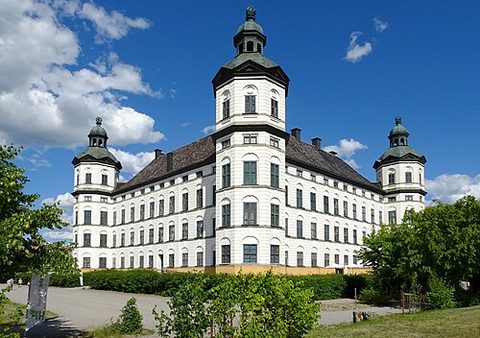
A Baroque palace on a peninsula jutting into Lake Mälaren between Stockholm and Uppsala, Sweden. Built 1654–1676 by Count Carl Gustaf Wrangel, one of Sweden's wealthiest military commanders during the 17th-century Age of Greatness.
When Wrangel died in 1676, construction halted abruptly — the great banqueting hall was left mid-build, with original tools still on the floor, creating one of Europe's most authentic 17th-century construction time capsules. Now a state museum housing around 20,000 items including the world's largest collection of personal 17th-century military weapons.
Visitor information
- Location
- Sweden
- Country
- Sweden
- Tier
- B (Great castles)
- Coordinates
- 59.7038, 17.6194
- Official site
- http://www.skoklostersslott.se/
Frequently asked questions
- Where is Skokloster Castle?
- Skokloster Castle is in Sweden, Sweden (approximately 59.7038, 17.6194).
- Can you visit Skokloster Castle?
- Yes — Skokloster Castle is open to visitors; see the official site at http://www.skoklostersslott.se/ for hours and tickets.
- What tier is Skokloster Castle on the Castle Atlas?
- Skokloster Castle is rated B tier on the Castle Atlas — Great castles.
- What can you see at Skokloster Castle?
- A Baroque palace on a peninsula jutting into Lake Mälaren between Stockholm and Uppsala, Sweden. Built 1654–1676 by Count Carl Gustaf Wrangel, one of Sweden's wealthiest military commanders during the 17th-century Age of Greatness.