Ludlow Castle
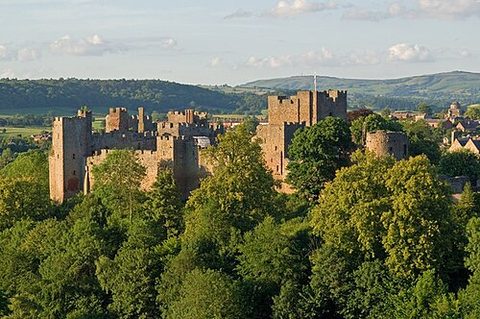
Ludlow Castle stands on a rocky promontory above the River Teme in Shropshire, England, probably founded around 1075 by Walter de Lacy following the Norman Conquest. One of England's first stone castles, it later served as the administrative seat of the Council of Wales and the Marches, effectively acting as the capital of Wales from the 16th century onward.
The ruins span almost five acres and include a 12th-century Great Tower, a Great Hall, and a rare circular Romanesque chapel modelled on the Church of the Holy Sepulchre in Jerusalem. John Milton's masque Comus was performed in the Great Hall in 1634. Open to the public.
Visitor information
- Location
- United Kingdom
- Country
- United Kingdom
- Tier
- C (Worth a visit if you're already in the area)
- Coordinates
- 52.3672, -2.723
- Official site
- https://www.ludlowcastle.com/
Frequently asked questions
- Where is Ludlow Castle?
- Ludlow Castle is in United Kingdom, United Kingdom (approximately 52.3672, -2.723).
- Can you visit Ludlow Castle?
- Yes — Ludlow Castle is open to visitors; see the official site at https://www.ludlowcastle.com/ for hours and tickets.
- What tier is Ludlow Castle on the Castle Atlas?
- Ludlow Castle is rated C tier on the Castle Atlas — Worth a visit if you're already in the area.
- What can you see at Ludlow Castle?
- Ludlow Castle stands on a rocky promontory above the River Teme in Shropshire, England, probably founded around 1075 by Walter de Lacy following the Norman Conquest. One of England's first stone castles, it later served as the administrative seat of the Council of Wales and the Marches, effectively acting as the capital of Wales from the 16th century onward.
All castles in the United Kingdom · Explore the full Castle Atlas →