Château de Chinon
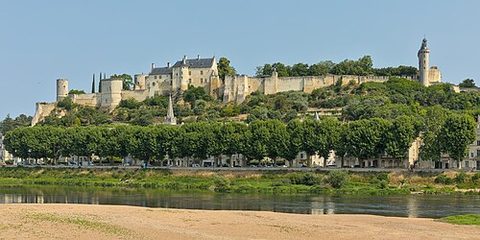
The Château de Chinon commands a ridge above the Vienne River in the Loire Valley, a fortress complex stretching some 300 metres. Theobald I, Count of Blois, raised a stone tower here in 954, but Henry II of England seized and expanded it from 1156, making Chinon a heart of the Plantagenet empire — and where he died in 1189. Philip II captured it in 1205 and built the Tour du Coudray, which later held Knights Templar leaders including Jacques de Molay in August 1308. In March 1429 Joan of Arc met Charles VII here, a pivotal encounter in the Hundred Years War.
Restored between 2003 and 2010, the castle is open to the public as a museum drawing around 130,000 visitors a year.
Visitor information
- Location
- France
- Country
- France
- Tier
- C (Worth a visit if you're already in the area)
- Coordinates
- 47.1681, 0.2361
- Official site
- http://www.forteressechinon.fr/
Frequently asked questions
- Where is Château de Chinon?
- Château de Chinon is in France, France (approximately 47.1681, 0.2361).
- Can you visit Château de Chinon?
- Yes — Château de Chinon is open to visitors; see the official site at http://www.forteressechinon.fr/ for hours and tickets.
- What tier is Château de Chinon on the Castle Atlas?
- Château de Chinon is rated C tier on the Castle Atlas — Worth a visit if you're already in the area.
- What can you see at Château de Chinon?
- The Château de Chinon commands a ridge above the Vienne River in the Loire Valley, a fortress complex stretching some 300 metres. Theobald I, Count of Blois, raised a stone tower here in 954, but Henry II of England seized and expanded it from 1156, making Chinon a heart of the Plantagenet empire — and where he died in 1189. Philip II captured it in 1205 and built the Tour du Coudray, which later held Knights Templar leaders including Jacques de Molay in August 1308. In March 1429 Joan of Arc met Charles VII here, a pivotal encounter in the Hundred Years War.