Špilberk Castle
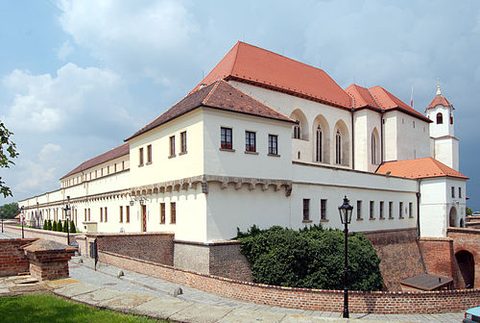
Špilberk Castle crowns a hill above Brno, Czech Republic, founded in the second half of the 13th century by King Ottokar II of Bohemia. It served as a royal residence and the seat of Moravian margraves from the mid-14th century, then was transformed into a powerful Baroque citadel during the 17th–18th centuries, withstanding a Swedish siege in 1645 and Prussian forces in 1742. Emperor Joseph II converted it into a civil prison in 1783, making it one of the Austrian Empire's harshest. Italian Carbonaro Silvio Pellico was held here, and his memoir My Prisons (1832) made Špilberk notorious across Europe. Emperor Franz Joseph closed the prison in 1855.
Since 1960 the castle has housed the Brno City Museum, open to the public, with explorable casemates and panoramic views over the city.
Visitor information
- Location
- Czechia
- Country
- Czechia
- Tier
- C (Worth a visit if you're already in the area)
- Coordinates
- 49.1944, 16.5989
- Official site
- https://www.spilberk.cz/
Frequently asked questions
- Where is Špilberk Castle?
- Špilberk Castle is in Czechia, Czechia (approximately 49.1944, 16.5989).
- Can you visit Špilberk Castle?
- Yes — Špilberk Castle is open to visitors; see the official site at https://www.spilberk.cz/ for hours and tickets.
- What tier is Špilberk Castle on the Castle Atlas?
- Špilberk Castle is rated C tier on the Castle Atlas — Worth a visit if you're already in the area.
- What can you see at Špilberk Castle?
- Špilberk Castle crowns a hill above Brno, Czech Republic, founded in the second half of the 13th century by King Ottokar II of Bohemia. It served as a royal residence and the seat of Moravian margraves from the mid-14th century, then was transformed into a powerful Baroque citadel during the 17th–18th centuries, withstanding a Swedish siege in 1645 and Prussian forces in 1742. Emperor Joseph II converted it into a civil prison in 1783, making it one of the Austrian Empire's harshest. Italian Carbonaro Silvio Pellico was held here, and his memoir My Prisons (1832) made Špilberk notorious across Europe. Emperor Franz Joseph closed the prison in 1855.