Alcazar of Segovia
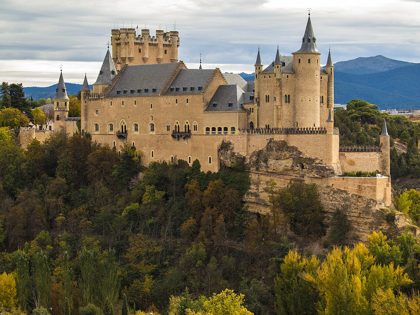
Rising from a rocky crag above the confluence of the Eresma and Clamores rivers in Castile, Spain, the Alcázar of Segovia was first documented in 1120 on Roman foundations later expanded by Almoravid and Castilian rulers. It served as royal palace, state prison, and treasury for centuries: Queen Isabella I sheltered here when news of Henry IV's death reached Segovia in 1474, and the Crown's treasure stored within helped fund Columbus's first voyage. Felipe II added the distinctive slate-capped spires in the late 16th century.
A devastating fire in 1862 destroyed the interior, faithfully restored using 1839 engravings. Today it houses a public museum and Spain's General Military Archive. Disney's silhouette of Snow White's castle was inspired by its distinctive profile.
Visitor information
- Location
- Segovia, Castile and Leon
- Country
- Spain
- Tier
- A (Magnificent, well worth a dedicated trip)
- Coordinates
- 40.9525, -4.1325
- Official site
- https://www.alcazardesegovia.com/
Frequently asked questions
- Where is Alcazar of Segovia?
- Alcazar of Segovia is in Segovia, Castile and Leon, Spain (approximately 40.9525, -4.1325).
- Can you visit Alcazar of Segovia?
- Yes — Alcazar of Segovia is open to visitors; see the official site at https://www.alcazardesegovia.com/ for hours and tickets.
- What tier is Alcazar of Segovia on the Castle Atlas?
- Alcazar of Segovia is rated A tier on the Castle Atlas — Magnificent, well worth a dedicated trip.
- What can you see at Alcazar of Segovia?
- Rising from a rocky crag above the confluence of the Eresma and Clamores rivers in Castile, Spain, the Alcázar of Segovia was first documented in 1120 on Roman foundations later expanded by Almoravid and Castilian rulers. It served as royal palace, state prison, and treasury for centuries: Queen Isabella I sheltered here when news of Henry IV's death reached Segovia in 1474, and the Crown's treasure stored within helped fund Columbus's first voyage. Felipe II added the distinctive slate-capped spires in the late 16th century.