Alhambra
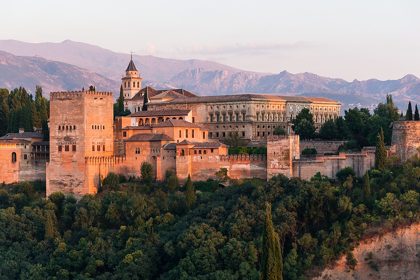
The Alhambra is a palatine city and fortress complex on Sabika hill above Granada, Spain — the crowning achievement of medieval Islamic architecture in the West. Construction began in 1238 under Muhammad I Ibn al-Ahmar, founder of the Nasrid dynasty; its celebrated palaces were completed under Yusuf I and Muhammad V in the 14th century. The complex served as the royal seat of the last Muslim kingdom in Iberia, blending delicate stucco carving, geometric tile work, and shaded garden courts.
After 1492, Charles V commissioned a Renaissance palace on site. Designated a UNESCO World Heritage Site in 1984 among Spain's inaugural inscriptions, it remains one of the country's most visited monuments. The name derives from the Arabic for "the red one," a nod to the iron-oxide clay in its walls.
Visitor information
- Location
- Granada, Andalusia
- Country
- Spain
- Tier
- A (Magnificent, well worth a dedicated trip)
- Coordinates
- 37.1775, -3.59
- Official site
- http://www.alhambra-patronato.es
Frequently asked questions
- Where is Alhambra?
- Alhambra is in Granada, Andalusia, Spain (approximately 37.1775, -3.59).
- Can you visit Alhambra?
- Yes — Alhambra is open to visitors; see the official site at http://www.alhambra-patronato.es for hours and tickets.
- What tier is Alhambra on the Castle Atlas?
- Alhambra is rated A tier on the Castle Atlas — Magnificent, well worth a dedicated trip.
- What can you see at Alhambra?
- The Alhambra is a palatine city and fortress complex on Sabika hill above Granada, Spain — the crowning achievement of medieval Islamic architecture in the West. Construction began in 1238 under Muhammad I Ibn al-Ahmar, founder of the Nasrid dynasty; its celebrated palaces were completed under Yusuf I and Muhammad V in the 14th century. The complex served as the royal seat of the last Muslim kingdom in Iberia, blending delicate stucco carving, geometric tile work, and shaded garden courts.