Alcazaba of Málaga
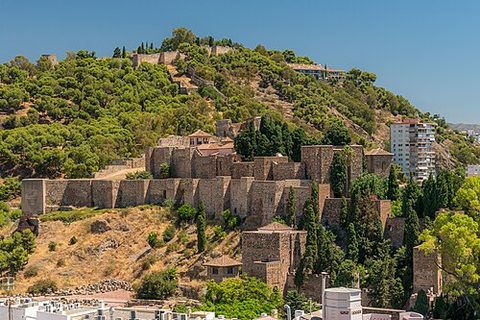
The Alcazaba of Malaga is an 11th-century Moorish palatial fortress on the slopes of Monte Gibralfaro in Malaga, southern Spain, covering some 15,000 square metres. Begun under the Hammudid dynasty probably under Yahya I around 1021, it is considered the prototype of military architecture of the taifa period, its double-walled design forcing any attacker through five successive gates. Ferdinand and Isabella captured it after a siege in 1487.
Today it contains two palace complexes -- an 11th-century Taifa palace and a Nasrid palace -- residential quarters, and Roman remains; a walled corridor links it to the higher Gibralfaro castle above.
Visitor information
- Location
- Spain
- Country
- Spain
- Tier
- C (Worth a visit if you're already in the area)
- Coordinates
- 36.7212, -4.4157
Frequently asked questions
- Where is Alcazaba of Málaga?
- Alcazaba of Málaga is in Spain, Spain (approximately 36.7212, -4.4157).
- Can you visit Alcazaba of Málaga?
- Yes — Alcazaba of Málaga is a recognised tourist attraction in Spain.
- What tier is Alcazaba of Málaga on the Castle Atlas?
- Alcazaba of Málaga is rated C tier on the Castle Atlas — Worth a visit if you're already in the area.
- What can you see at Alcazaba of Málaga?
- The Alcazaba of Malaga is an 11th-century Moorish palatial fortress on the slopes of Monte Gibralfaro in Malaga, southern Spain, covering some 15,000 square metres. Begun under the Hammudid dynasty probably under Yahya I around 1021, it is considered the prototype of military architecture of the taifa period, its double-walled design forcing any attacker through five successive gates. Ferdinand and Isabella captured it after a siege in 1487.