Ksiaz Castle
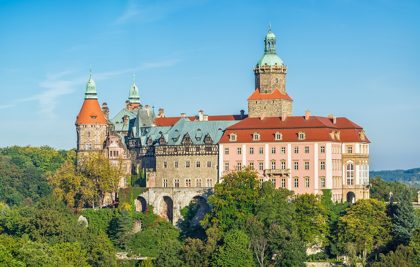
Książ Castle, the third largest in Poland, occupies a forested canyon above Wałbrzych in Lower Silesia. Duke Bolko I the Severe built it between 1288 and 1292; the von Hochberg family held it from 1509 until Nazi confiscation in 1941, adding Gothic, Renaissance, Baroque, and Neo-Renaissance elements across four centuries. During World War II the Organisation Todt forced concentration camp labourers to excavate a vast tunnel network beneath it as part of the secret Project Riese, whose exact purpose remains historically debated.
The underground tourist route, opened on 16 October 2018, is the castle's most compelling draw. Voted one of the Seven Wonders of Poland, it attracts over 300,000 visitors per year.
Visitor information
- Location
- Walbrzych
- Country
- Poland
- Tier
- A (Magnificent, well worth a dedicated trip)
- Coordinates
- 50.8422, 16.2917
- Official site
- http://www.en.ksiaz.walbrzych.pl/
Frequently asked questions
- Where is Ksiaz Castle?
- Ksiaz Castle is in Walbrzych, Poland (approximately 50.8422, 16.2917).
- Can you visit Ksiaz Castle?
- Yes — Ksiaz Castle is open to visitors; see the official site at http://www.en.ksiaz.walbrzych.pl/ for hours and tickets.
- What tier is Ksiaz Castle on the Castle Atlas?
- Ksiaz Castle is rated A tier on the Castle Atlas — Magnificent, well worth a dedicated trip.
- What can you see at Ksiaz Castle?
- Książ Castle, the third largest in Poland, occupies a forested canyon above Wałbrzych in Lower Silesia. Duke Bolko I the Severe built it between 1288 and 1292; the von Hochberg family held it from 1509 until Nazi confiscation in 1941, adding Gothic, Renaissance, Baroque, and Neo-Renaissance elements across four centuries. During World War II the Organisation Todt forced concentration camp labourers to excavate a vast tunnel network beneath it as part of the secret Project Riese, whose exact purpose remains historically debated.