Czocha Castle
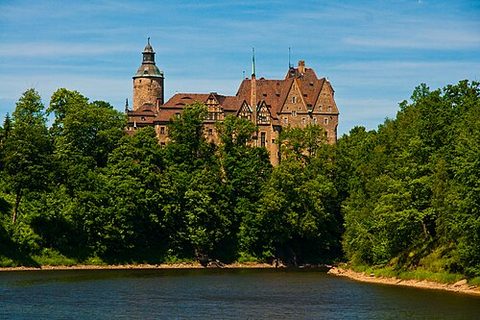
Czocha Castle occupies a spur of gneiss rock above Lake Leśniańskie on the Kwisa river in Lower Silesia, southwestern Poland. Ordered by Wenceslaus I of Bohemia, it was built between 1241 and 1247 as a Bohemian-Lusatian border fortress. A fire gutted it in 1793. In 1909 cigar manufacturer Ernst Gutschow bought the ruin and hired architect Bodo Ebhardt to reconstruct it from a 1703 engraving, creating the neo-medieval outline seen today.
The Polish Army used it as a rest facility after World War II until September 1996, when it reopened as a hotel and conference centre. It was voted one of the New Seven Wonders of Poland in a 2012 National Geographic Poland poll and hosts the internationally known College of Wizardry live-action role-playing events.
Visitor information
- Location
- Poland
- Country
- Poland
- Tier
- B (Great castles)
- Coordinates
- 51.0306, 15.3036
- Official site
- http://www.hotelewam.pl/631-zamek-czocha-sucha.html
Frequently asked questions
- Where is Czocha Castle?
- Czocha Castle is in Poland, Poland (approximately 51.0306, 15.3036).
- Can you visit Czocha Castle?
- Yes — Czocha Castle is open to visitors; see the official site at http://www.hotelewam.pl/631-zamek-czocha-sucha.html for hours and tickets.
- What tier is Czocha Castle on the Castle Atlas?
- Czocha Castle is rated B tier on the Castle Atlas — Great castles.
- What can you see at Czocha Castle?
- Czocha Castle occupies a spur of gneiss rock above Lake Leśniańskie on the Kwisa river in Lower Silesia, southwestern Poland. Ordered by Wenceslaus I of Bohemia, it was built between 1241 and 1247 as a Bohemian-Lusatian border fortress. A fire gutted it in 1793. In 1909 cigar manufacturer Ernst Gutschow bought the ruin and hired architect Bodo Ebhardt to reconstruct it from a 1703 engraving, creating the neo-medieval outline seen today.