Aragonese Castle
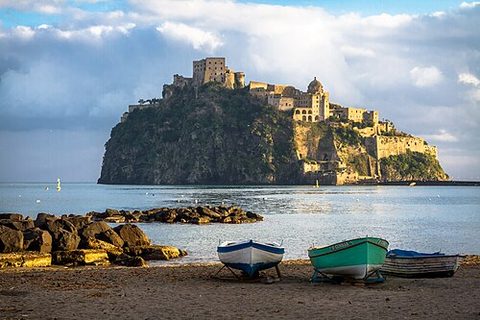
Aragonese Castle occupies a small volcanic islet off eastern Ischia in the Gulf of Naples, connected to the main island by a 220-metre stone causeway. The site was first fortified in 474 BC by Hiero I of Syracuse; in 1441 Alfonso V of Aragon replaced a wooden bridge with a stone causeway and strengthened the fortress. At its peak the complex housed nearly 1,900 families across thirteen churches and a convent. English forces shelled it heavily in 1809; Ferdinand I then converted it into a political prison in 1823.
Sold to a private owner in 1912, it is now the most visited monument on Ischia. Renaissance poet Vittoria Colonna lived here from 1501 to 1536, and Michelangelo was among the major figures who visited.
Visitor information
- Location
- Italy
- Country
- Italy
- Tier
- A (Magnificent, well worth a dedicated trip)
- Coordinates
- 40.7316, 13.9649
Frequently asked questions
- Where is Aragonese Castle?
- Aragonese Castle is in Italy, Italy (approximately 40.7316, 13.9649).
- Can you visit Aragonese Castle?
- Yes — Aragonese Castle is a recognised tourist attraction in Italy.
- What tier is Aragonese Castle on the Castle Atlas?
- Aragonese Castle is rated A tier on the Castle Atlas — Magnificent, well worth a dedicated trip.
- What can you see at Aragonese Castle?
- Aragonese Castle occupies a small volcanic islet off eastern Ischia in the Gulf of Naples, connected to the main island by a 220-metre stone causeway. The site was first fortified in 474 BC by Hiero I of Syracuse; in 1441 Alfonso V of Aragon replaced a wooden bridge with a stone causeway and strengthened the fortress. At its peak the complex housed nearly 1,900 families across thirteen churches and a convent. English forces shelled it heavily in 1809; Ferdinand I then converted it into a political prison in 1823.