Castel dell'Ovo
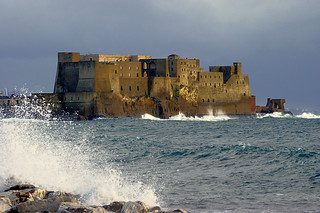
Castel dell'Ovo sits on the rocky islet of Megaride in the Gulf of Naples, on a site first settled by Greek colonists from Cumae in the 8th century BC and later occupied by a villa of the Roman general Lucius Licinius Lucullus. Roger II of Sicily built a castle here around 1140; Frederick II had additional towers constructed in 1222; and after Ferdinand the Catholic's siege of 1503 the fortress was heavily restructured. Among its prisoners was Romulus Augustulus, last Western Roman Emperor, exiled here in 476 AD.
The name — Egg Castle — recalls a medieval legend that Virgil hid a magical egg in the foundations to hold the structure upright. Its halls host exhibitions and cultural events open to the public.
Visitor information
- Location
- Italy
- Country
- Italy
- Tier
- C (Worth a visit if you're already in the area)
- Coordinates
- 40.8283, 14.2477
Frequently asked questions
- Where is Castel dell'Ovo?
- Castel dell'Ovo is in Italy, Italy (approximately 40.8283, 14.2477).
- Can you visit Castel dell'Ovo?
- Yes — Castel dell'Ovo is a recognised tourist attraction in Italy.
- What tier is Castel dell'Ovo on the Castle Atlas?
- Castel dell'Ovo is rated C tier on the Castle Atlas — Worth a visit if you're already in the area.
- What can you see at Castel dell'Ovo?
- Castel dell'Ovo sits on the rocky islet of Megaride in the Gulf of Naples, on a site first settled by Greek colonists from Cumae in the 8th century BC and later occupied by a villa of the Roman general Lucius Licinius Lucullus. Roger II of Sicily built a castle here around 1140; Frederick II had additional towers constructed in 1222; and after Ferdinand the Catholic's siege of 1503 the fortress was heavily restructured. Among its prisoners was Romulus Augustulus, last Western Roman Emperor, exiled here in 476 AD.